A new vinyl floor in your living room, kitchen or bedroom? Then you face an important choice: will you get started yourself or have the floor installed by a professional?
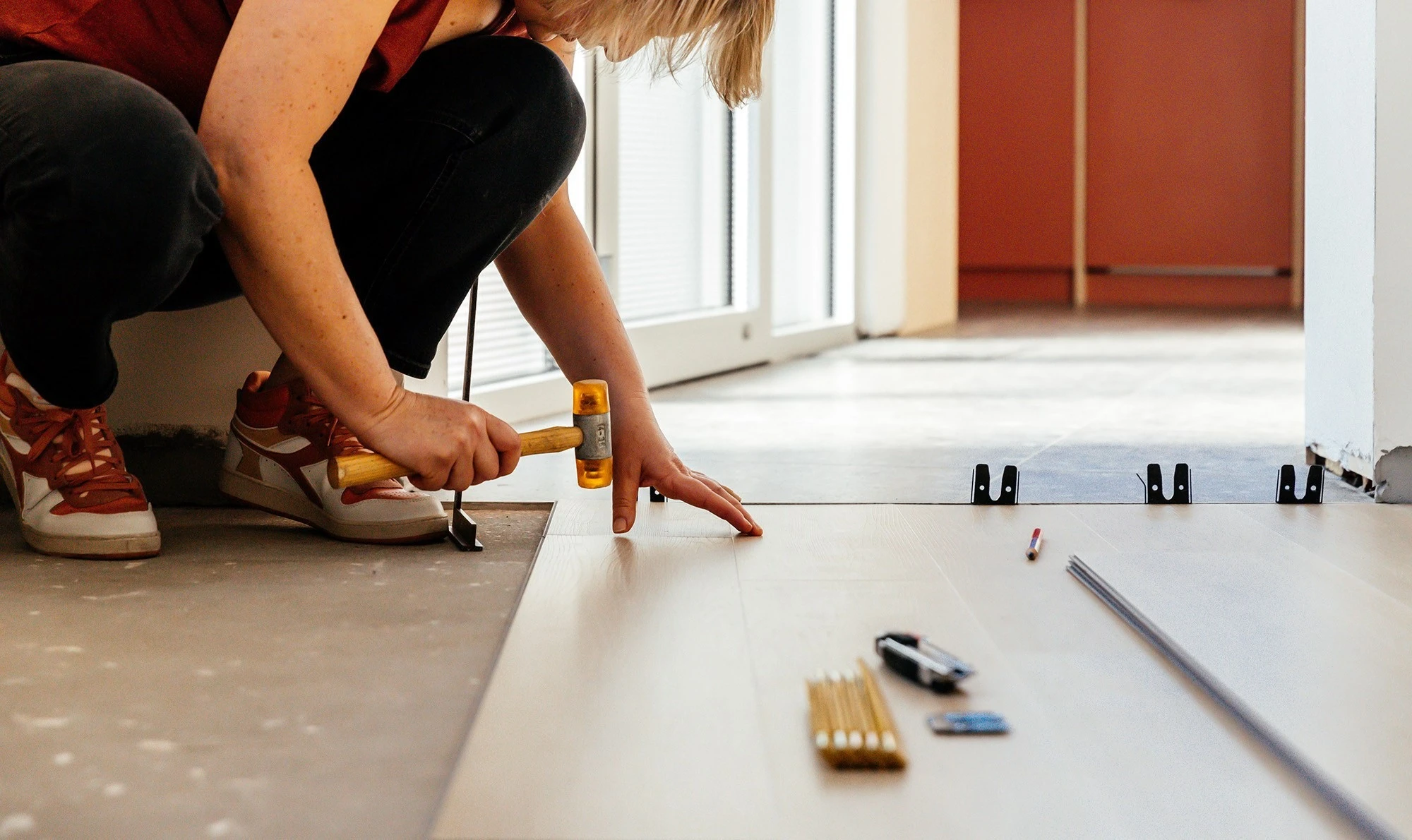
Laying a vinyl floor yourself can save you a lot in installation costs. Especially with a click-system floor, it's perfectly feasible for many DIYers. Still, a beautiful floor also requires the right preparation. An uneven subfloor, incorrectly laid planks or too little space along the walls can cause problems later on.
What's the best choice in your situation? We explain when you can install a vinyl floor yourself, when a professional is the better option and what to take into account.
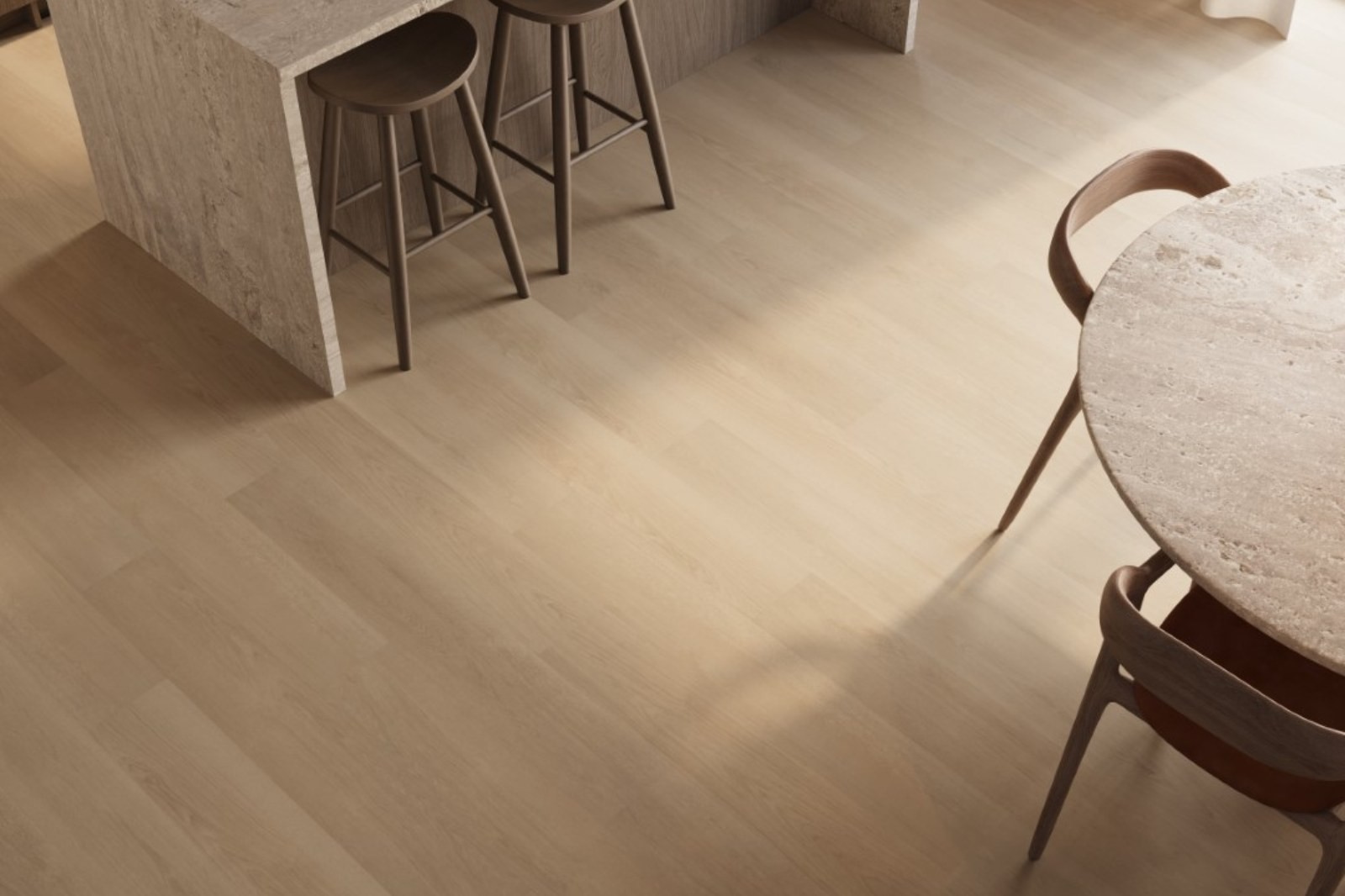
Yes, you can usually lay a click vinyl floor yourself. With click vinyl, the planks or tiles click into each other without having to be glued to the subfloor. That makes click vinyl particularly interesting if you want to install a floor yourself. You don't need extensive experience, but working accurately remains important.
Not every vinyl floor is installed in the same way. There are two main installation methods:
Click vinyl: the planks are attached to each other with a click system. Ideal for DIYers who can work accurately.
Glue-down vinyl floor: the floor is glued directly onto a suitable subfloor. This requires more technical knowledge and a very flat subfloor, so professional installation is a must: as a DIYer, you won't get it right.
Which method suits you depends on the type of vinyl floor, the subfloor and the room where you want to lay the floor.
You save on labor costs: you only pay for the floor, the finishing and possibly some tools.
You work at your own pace: you don't have to wait for an installer and decide for yourself when to get started.
You have full control: you decide on the laying direction, the layout of the planks and the finishing yourself.
The subfloor is your responsibility: an uneven or damp subfloor is the main cause of problems. You have to assess that correctly yourself.
Finishing requires precision: door frames, pipes, stairs and transitions to other rooms are the trickiest parts. That's where you see the difference between a nice floor and a perfect one.
A bad click is a weak point: if a plank isn't completely flat after laying, it hasn't clicked in properly. You have to recognize that mistake and start again.
It takes time: a professional works faster thanks to experience and professional equipment. Expect it to take longer yourself, especially with your first floor.
Want to lay a vinyl floor yourself? With good preparation and the right method, you'll get a long way. Follow these five steps.
A good subfloor is the basis of a beautiful vinyl floor. So check whether the existing floor is sufficiently flat, stable, dry and clean.
Unevenness can cause the planks not to fit together neatly or the click system to become damaged over time. If necessary, level the subfloor first.
Calculate how many square meters of vinyl flooring you need and allow extra material for cutting waste.
The amount of extra material depends on, among other things, the shape of the room and the chosen laying pattern. With a herringbone pattern or a room with lots of corners, you usually have more cutting waste than with a simple straight layout.
To lay click vinyl, you usually don't need specialized equipment. With a sharp utility knife, a tape measure, a try square, spacers, a tapping block and a rubber mallet you can already do a lot of the work.
Always check the specific installation instructions for your floor beforehand. That way, you'll know exactly which tools and preparations are needed.
Start in the right place in the room and work row by row. Click the planks together carefully and check each time that they fit properly.
Also leave enough space between the floor and the walls. For Lamett Parquetvinyl, for example, an expansion gap of 8 mm is prescribed. That space is needed to allow the floor to move freely.
Once all the planks are laid, you can remove the spacers and install the skirting boards.
Also finish the transitions to other rooms neatly with suitable profiles. That way, your floor not only looks great, but the installation also remains technically correct.
Want to see exactly how installation works? Then take a look at Lamett's installation videos and instructions. You'll find practical explanations for planks, tiles and herringbone floors.

Laying a vinyl floor yourself is quite possible, but sometimes calling in a professional is the better choice. You pay a little more, but save time and are sure of a professional finish.
Your subfloor isn't suitable: with unevenness, damage or moisture problems, a professional ensures the right preparation.
You choose glue-down vinyl: this installation method requires more experience and precision than click vinyl.
You want a herringbone floor: the pattern requires extra measuring and cutting. A professional ensures accurate installation.
You have underfloor heating: correct installation according to the technical instructions is important for a good result.
You have lots of corners and obstacles: doorways, pipes and transitions make installation more complicated.
You're short on time: a professional usually works faster, so you can enjoy your new floor sooner.
There's no choice that's best for everyone. It mainly depends on your experience, your budget and the complexity of the room.
| DIY | Professional installation | |
|---|---|---|
| Costs | Lower installation costs | Extra labor costs |
| Time | You invest your own time | You save your own working time |
| Experience | Some handiness required | Experienced professional |
| Finish | Depends on your accuracy | Professional execution |
| Suitable for | Simple rooms with click vinyl | Complex rooms and glue-down floors |
Got a simple room and enjoy working on your home yourself? Then click vinyl is an interesting option. Is it a larger renovation, a difficult subfloor, or do you mainly want certainty about the result? Then a professional installer can save you a lot of worry.
Discover Parquetvinyl by Lamett: a realistic look in planks, herringbone or tiles, combined with the comfort of vinyl.
A click vinyl floor is relatively easy to install yourself. Above all, you need a suitable subfloor, the right tools and an accurate method. In a complex room, professional help is recommended. Always have a glue-down vinyl floor installed professionally.
In many cases, yes, as long as the existing floor is sufficiently flat, dry, stable and suitable. Deep joints or unevenness may require extra preparation. Always check the installation instructions of the chosen vinyl floor.
That depends on the floor. Lamett Parquetvinyl already has an integrated underlay. That's why you shouldn't simply add an extra soft underlay, as it can damage the click system. Always follow the specific installation instructions.
Yes, you can also install a herringbone floor in click vinyl yourself. Do keep in mind that this laying pattern requires more accuracy and preparation than straight planks. Check the installation instructions beforehand and decide whether you have enough experience.
That depends on the surface area, the laying pattern, the condition of the subfloor and your experience. You can often lay a simple room with click vinyl within a day if the subfloor is already prepared. Larger rooms or extra preparatory work take longer.
Whether you get started yourself or call in a professional: a beautiful result always starts with the right floor. With Parquetvinyl by Lamett, you choose a water-resistant, easy-care floor that you can match completely to your interior.
Choose from classic planks, an elegant herringbone or large tiles, each in different colors and formats. That way, you'll find a suitable floor for a warm living area as well as a sleek kitchen or bathroom.
Want to see and feel the floors for yourself first? Order free samples, discover the Parquetvinyl collections or check out the installation guides before you get started.
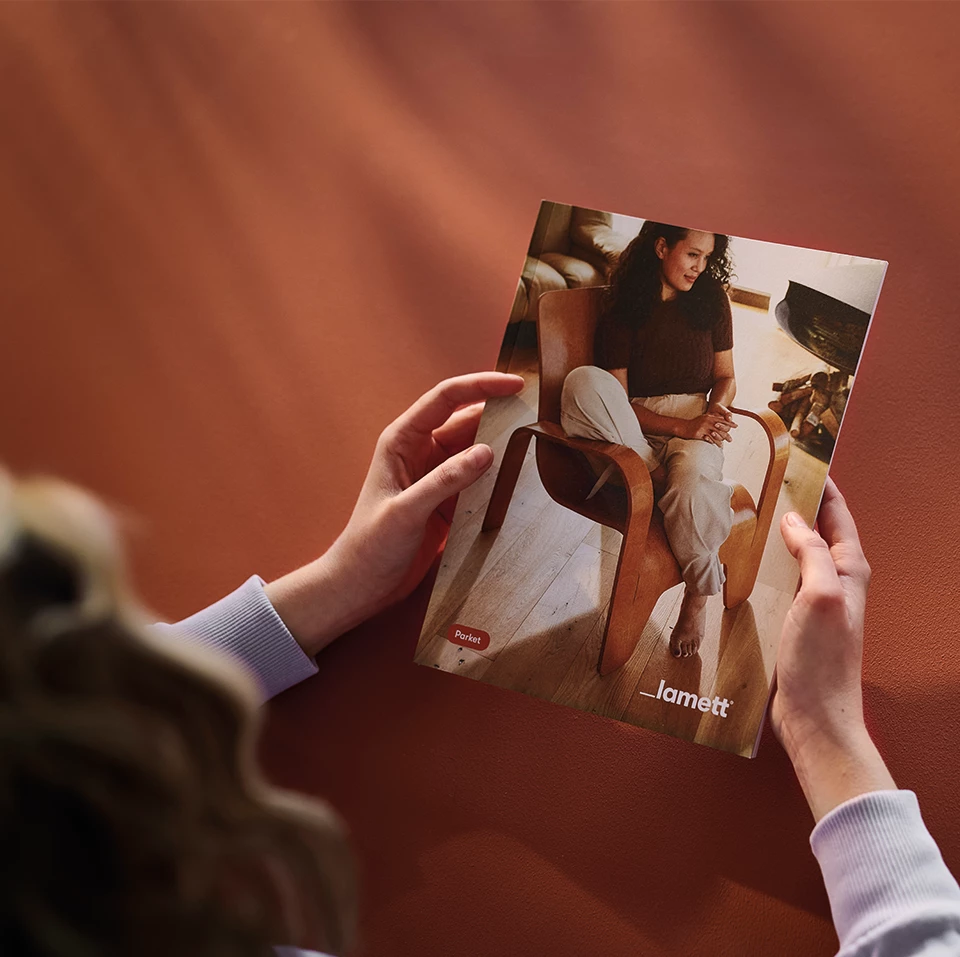
Want to browse between the different collections and photos? Download our inspiration brochure. Besides all the collections and lots of photos, you will also find all the technical details.

Choosing a new floor isn’t something you do every day. You want a floor that suits your interior but can also withstand everyday life.

Life in a holiday home is different from life at home. Children come in with wet feet after a dip in the pool, sand is brought in from the beach and every week a different group of guests stays.

Herringbone, chevron or planks: three popular ways to lay a wooden floor, each with a very different look. One brings calm to a room, the other turns the floor into a real eye-catcher.